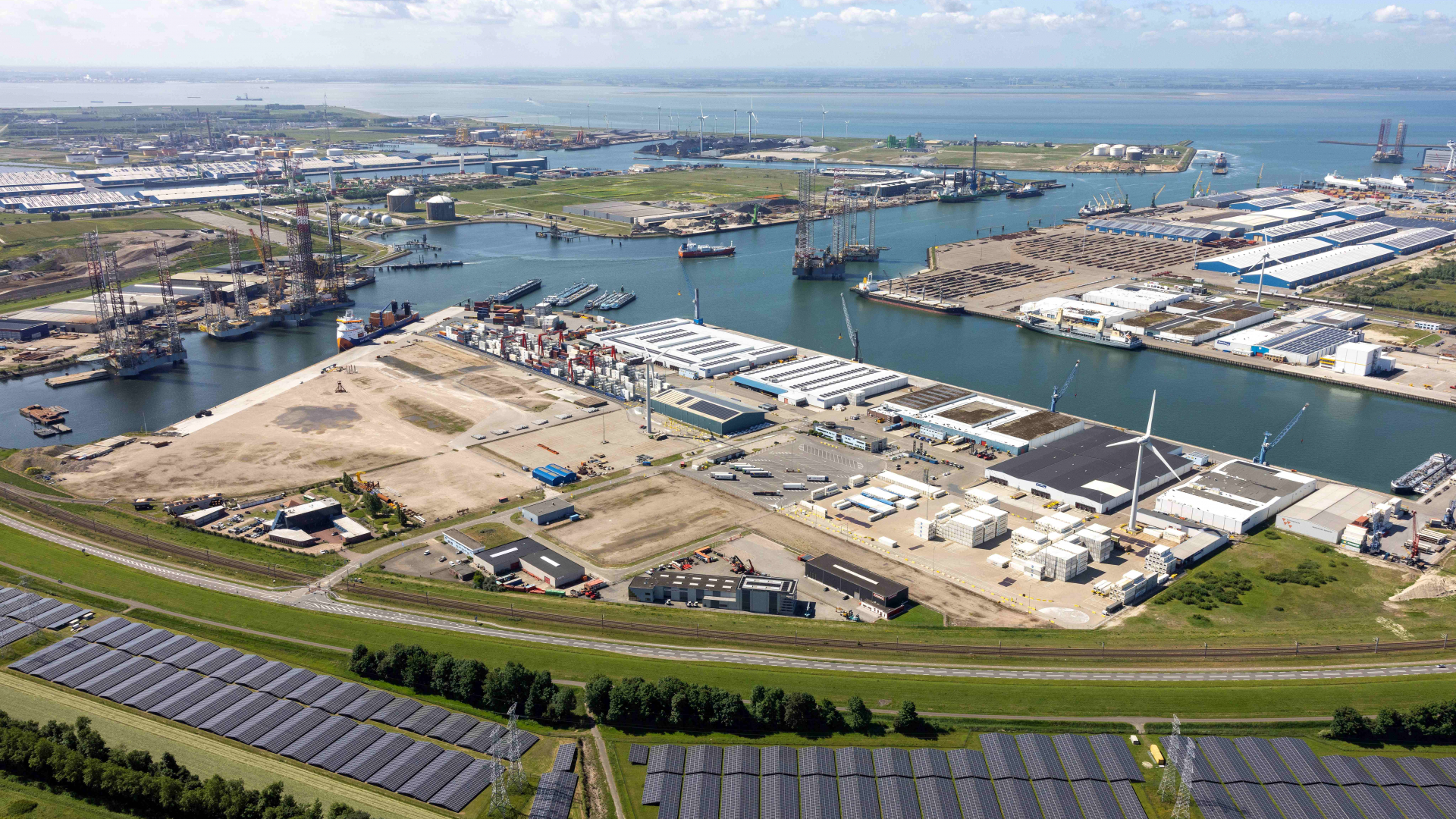
North Sea Port publishes first sustainability report

North Sea Port has published its first sustainability report. In it, the port outlines its own role, impact, and ambitions regarding sustainability. The report compiles facts, figures, and practical examples and shows how North Sea Port is working towards sustainable growth, with a view to 2030 and 2050.
This is a relevant document for the North Sea Port region. The port forms a cross-border economic axis from Vlissingen and Terneuzen to Ghent and plays an important role in logistics, industry, and infrastructure. It is precisely in such an environment that insight into sustainability, the living environment, safety, and future-proofing is of importance.
Four levels of impact
In the report, North Sea Port distinguishes between four levels at which the port has an impact:
- within the port authority,
- in the port area,
- in the surrounding area,
- in Europe, and the world
For each level, it is explained how sustainability is reflected in policy, decision-making, and implementation. This includes resilience, smart land use, the energy and raw materials transition, nature and the living environment, and the port's contribution to cleaner logistics and energy chains.
Significance for the region
For Smart Delta Resources, this report is particularly relevant because it demonstrates the broad scope of how sustainability must be approached within a port and industrial cluster. This applies not only within the organizations themselves, but also in the way spatial planning, infrastructure, industry, the living environment, and international supply chains are interconnected.
In a region where industry, logistics, energy, and the environment are closely linked, achieving sustainability requires collaboration between companies, governments, knowledge institutions, and infrastructure parties. The North Sea Port sustainability report provides a broader context for this and reveals the challenges and ambitions that converge in the port area.
Transparency and Accessibility
North Sea Port explicitly positions the report as an accessible document for a broad audience, from businesses and partners to local residents and policymakers. As such, it is not only an account of its own approach but also an instrument to further support the conversation about the sustainable development of the port area.